
How to Choose the Best 15.6″ Portable Monitor

https://amzn.to/48SuNbe15.6″ Portable Monitor: Expand Your Digital Horizon
A 15.6″ portable monitor is more than just a peripheral; it’s an investment in your productivity and creative potential. By understanding the key features, carefully considering your needs, and following the setup guidance, you can seamlessly integrate a portable monitor into your workflow and enjoy the benefits of a versatile, on-the-go workspace. Elevate your digital experience today.
In today’s fast-paced digital world, productivity is often measured by the number of screens we can efficiently manage. Whether you’re a digital nomad seeking a versatile secondary screen or a creative professional requiring more color-accurate real estate, a portable monitor has become an essential tool. This ultimate guide will delve into the features, benefits, and crucial factors to consider when choosing a 15.6″ portable monitor, ensuring you make an informed decision for your workspace upgrade.
Why Choose a Portable Monitor?
The decision to invest in a portable monitor goes beyond just adding another device. It’s about enhancing your workflow and unlocking new levels of productivity.
- Increased Productivity: A portable monitor allows you to have multiple windows open side-by-side, which is invaluable for multitasking, research, and data comparison. Studies show that a second screen can increase productivity by up to 30%.
- Enhanced Creativity: For creative professionals like designers and editors, more screen real estate means more space for toolbars, timelines, and high-resolution previews, allowing for a more fluid and precise creative process.
- Portability and Convenience: Unlike traditional desktop monitors, portable monitors are lightweight, thin, and easily fit into most laptop bags. This makes them ideal for travel, co-working spaces, and even small home offices.
Key Features to Look for in a 15.6″ Portable Monitor
When selecting a 15.6″ portable monitor, it’s crucial to understand the key features that directly impact performance and user experience.
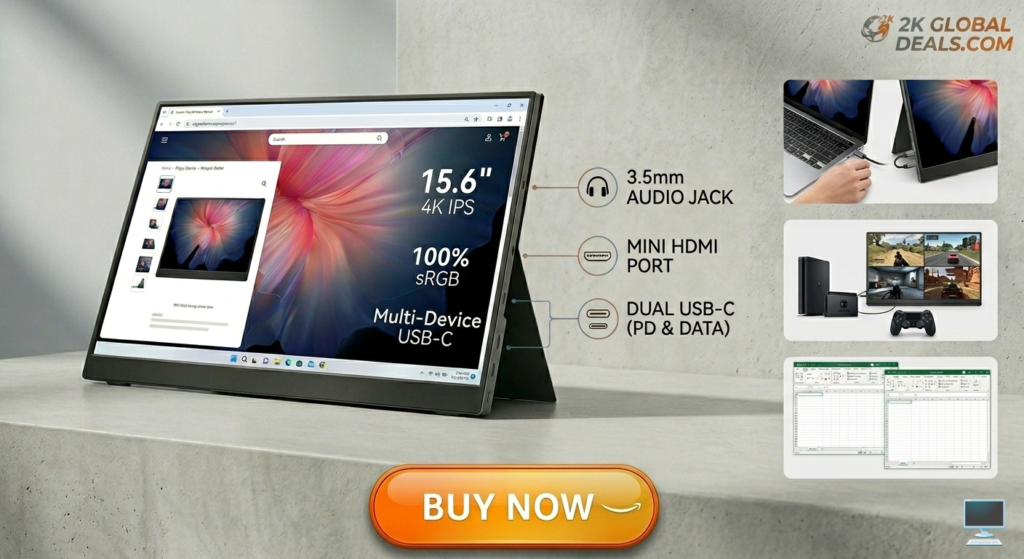
- Display Quality (IPS, 4K, sRGB):
- IPS Panel: In-Plane Switching (IPS) panels are known for their vibrant colors, wide viewing angles, and accurate color reproduction. This is particularly important for creatives.
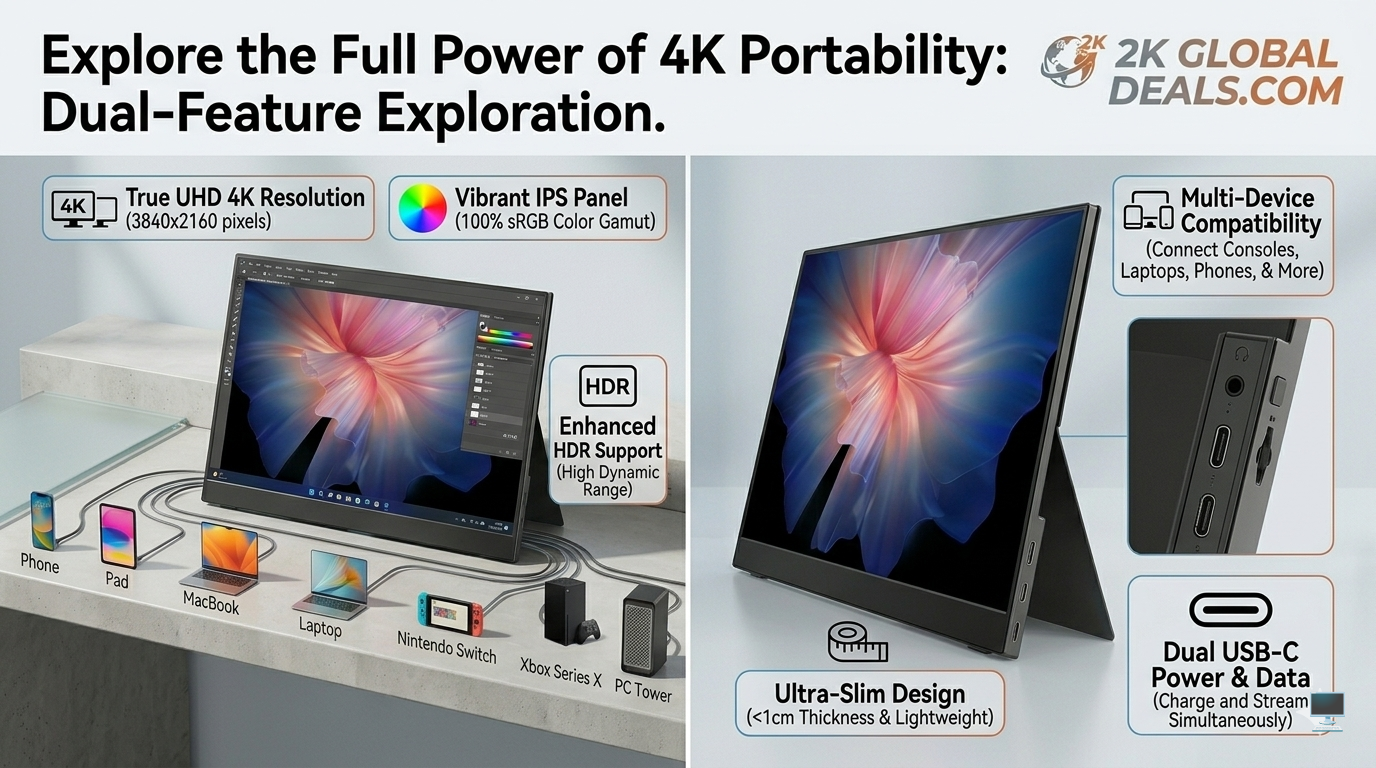
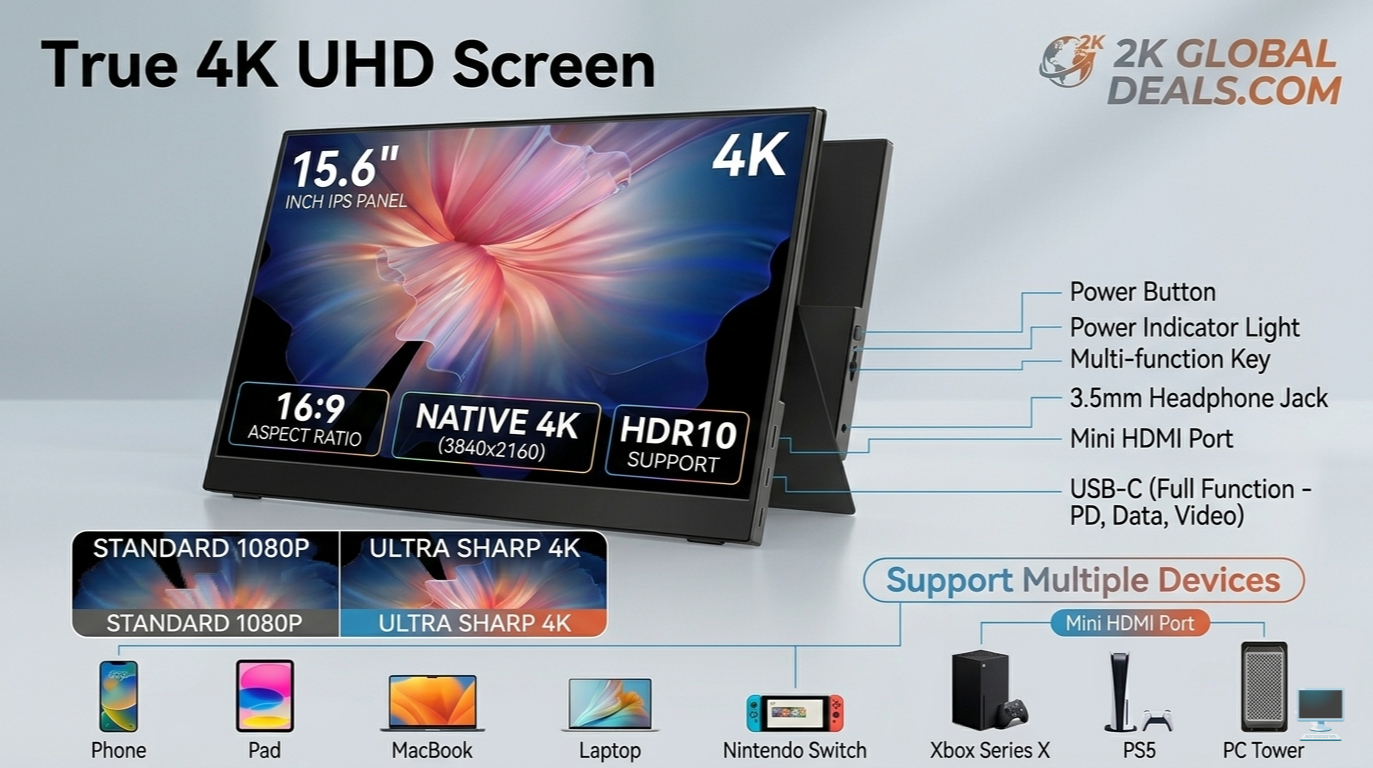
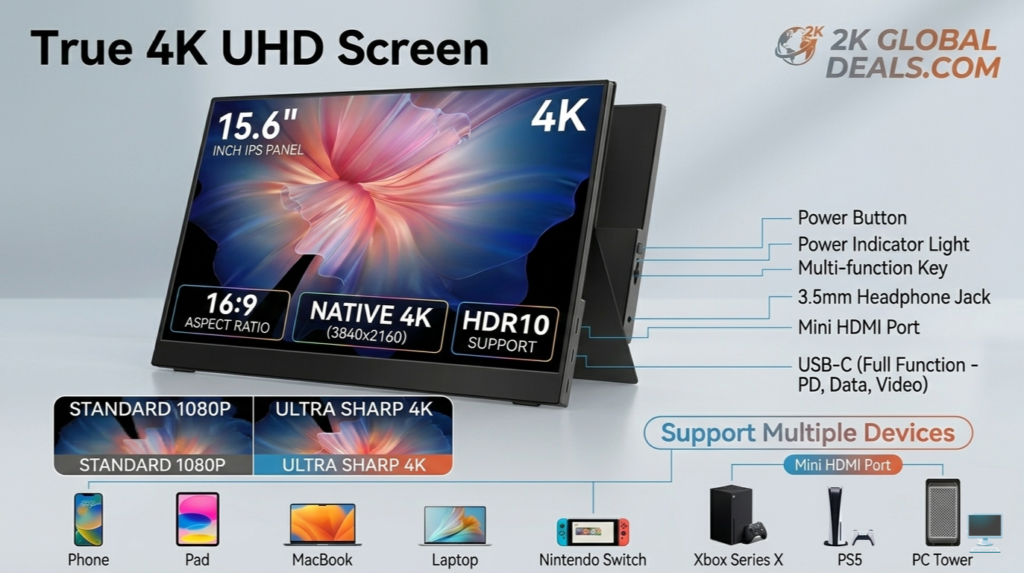
- 4K Resolution: A 4K portable monitor offers incredibly sharp images and text, with four times the pixels of standard Full HD, providing a more detailed and immersive viewing experience.
- sRGB Color Gamut: Look for a monitor that covers 100% of the sRGB color gamut to ensure accurate colors for photo and video editing.
- Connectivity Options:
- Mini HDMI Port: A Mini HDMI port ensures compatibility with a wide range of devices, including laptops, gaming consoles, and even cameras.
- Dual USB-C (PD & Data): USB-C has become the modern standard, offering simultaneous power delivery (PD) and data transmission. Look for dual USB-C ports for maximum versatility, allowing you to connect and power multiple devices.
- 3.5mm Audio Jack: An essential feature for connecting external speakers or headphones, especially when internal monitor speakers aren’t up to par.
- [H3 Header] Multi-Device Compatibility: A high-quality portable monitor should be compatible with various devices, including Windows and Mac laptops, smartphones, gaming consoles (like Nintendo Switch, PS5, Xbox), and even desktop computers as a secondary screen.
How to Choose the Right Portable Monitor for You
Choosing the right portable monitor depends on your unique needs and use cases.
- For Digital Nomads: Prioritize lightweight design, durable construction, and excellent battery life if possible. USB-C connectivity is key for minimizing cables.
- For Creative Professionals: Focus on display quality, prioritizing IPS panels, 4K resolution, and 100% sRGB color gamut for precise color work.
- For Gamers: Consider monitors with faster refresh rates and low input lag for a smoother gaming experience, along with robust connectivity for consoles.
Step-by-Step Guide to Setting Up Your Portable Monitor
Setting up a portable monitor is straightforward. Here’s a typical process:
- Power Up: Connect the monitor to a power source using the provided adapter or a USB-C cable connected to your laptop (if it supports power delivery).
- ] Connect to Device: Use the appropriate cable (HDMI to Mini HDMI or USB-C to USB-C) to connect the monitor to your laptop, smartphone, or console.
- Adjust Settings: On your host device (e.g., Windows laptop), go to display settings to extend or duplicate your desktop and adjust resolution and orientation
Frequently Asked Questions (FAQ)
Q: Do portable monitors need a separate power source?
A: Many portable monitors can be powered directly from your laptop via USB-C if your laptop supports power delivery. Otherwise, they will require a separate power source.
Q: Can I use a portable monitor with my smartphone?
A: Yes, many portable monitors are compatible with smartphones that support video output over USB-C.
Q: Are portable monitors good for gaming?
A: Yes, they can be great for gaming, especially those with good color reproduction and response times.
Q: How do I protect my portable monitor while traveling?
A: It’s best to use a protective case or sleeve designed for portable monitors. Many models come with a smart cover that doubles as a stand.
Q: Is a 4K portable monitor worth it?
A: A 4K portable monitor offers significantly sharper and more detailed images, making it well worth it for creatives and anyone who values display quality.