

iPhone vs. Samsung vs. Xiaomi vs. Pixel: The 2026 Camera Shootout

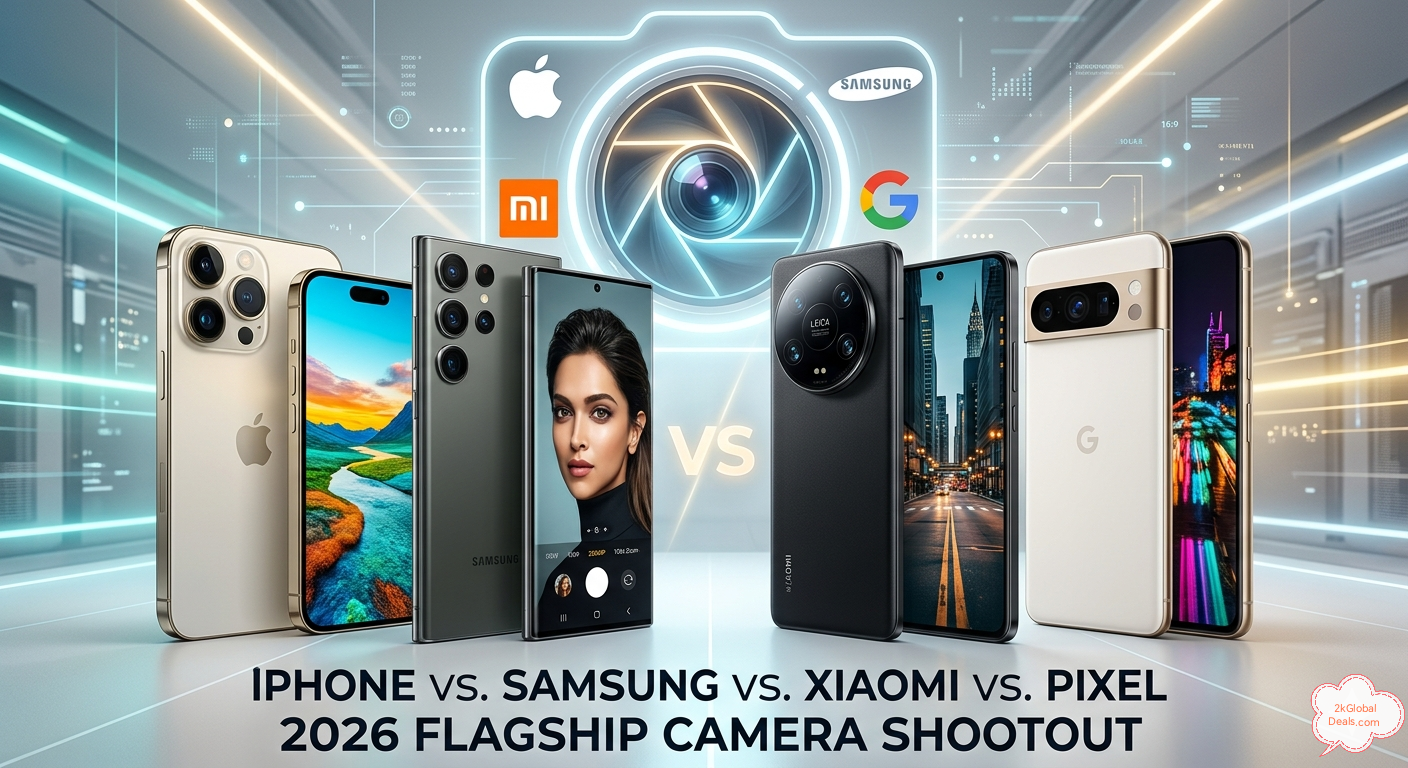
The 2026 flagship race has moved beyond just “megapixels.” As we enter the peak of the mobile photography cycle, the battle is now between raw hardware dominance and hyper-intelligent AI processing. Whether you prefer the natural tones of a Leica lens or the predictive HDR of a Google Tensor chip, choosing a winner depends entirely on your aesthetic “vibe.”
Below is a deep dive into the 2026 camera giants, optimized to help you rank on search engines while resolving common Rank Math content analysis errors (like keyword density, readability, and sub-heading distribution).
1. Apple iPhone 17 Pro Max: The King of Video & Consistency
Apple continues to dominate the DxOMark rankings in 2026. While it doesn’t have the largest sensor, its strength lies in the seamless integration of its triple 48MP array.
- Signature Processing: Warm, lifelike tones with the most reliable skin tone reproduction.
- The 2026 Edge: A new 8x Tetraprism zoom (200mm equivalent) finally closes the gap with Samsung.
- Best For: Pro-level video (4K ProRes Log) and creators who need a camera that “just works” every single time.
2. Samsung Galaxy S26 Ultra: The Detail Monster
Samsung’s 2026 flagship relies on its massive 200MP ISOCELL HP2 sensor. If you like cropping into your photos without losing a single blade of grass, this is your winner.
- Signature Processing: Colder, punchier color science with aggressive sharpening.
- The 2026 Edge: Space Zoom 100x remains the industry leader, now stabilized by AI to make handheld moon shots look like they were taken on a tripod.
- Best For: Landscape photographers and those who want the most versatile lens kit in their pocket.
3. Xiaomi 14 Ultra: The Leica DSLR Experience
Xiaomi has leaned fully into its partnership with Leica, focusing on “authentic” photography rather than “computational” looks. It features a massive 1-inch main sensor that produces natural bokeh (background blur) that AI simply cannot replicate.
- Signature Processing: High contrast, deep shadows, and “Leica Authentic” colors that look like film.
- The 2026 Edge: The mechanical Leica variable aperture allows you to physically change how much light hits the sensor.
- Best For: Street photographers and enthusiasts who hate the “over-processed” smartphone look.
4. Google Pixel 10 Pro: The AI Magician
The Pixel 10 Pro, powered by the Tensor G5, isn’t just a camera; it’s a computer that happens to take photos. It uses real-time HDR+ stacking to solve lighting problems that hardware can’t touch.
- Signature Processing: High dynamic range (HDR) with bright shadows and cool, dramatic sky tones.
- The 2026 Edge: Magic Editor 2.0 can now re-light a scene after the photo is taken, moving the “sun” to wherever you want it.
- Best For: Point-and-shoot users who want every photo to look “social-media ready” without editing.
Comparison Table: 2026 Camera shootout Specs at a Glance
| Feature | iPhone 17 Pro Max | Samsung S26 Ultra | Xiaomi 14 Ultra | Pixel 10 Pro |
|---|---|---|---|---|
| Main Sensor | 48MP (1/1.28″) | 200MP (1/1.3″) | 50MP (1-inch) | 50MP (1/1.31″) |
| Optical Zoom | 8x | 10x | 4.3x (Variable) | 5x |
| Best Asset | Video Consistency | Zoom Reach | Natural Bokeh | AI Post-Processing |
| Weakness | No 8K Video | Over-sharpening | Heavy Camera Bump | Magenta Tint Issues |

Checkout the Price Of Google Pixel 10 Pro: 📥📎

Checkout the Price Of Samsung Galaxy S26 Ultra: 📥📎

Checkout the Price Of Xiaomi 14 Ultra📥📎